What Actually Happens Before Construction Even Starts?
When people think about building a custom home, they often picture the moment construction begins: a full crew coming in, machinery turning up on site, excavation, framing, and visible progress on the first day.
In reality, the construction phase is only one part of a much larger process, but
Construction Is Only One Part of the Process
The work that happens before work boots hit the ground is what shapes how smoothly a project moves forward. Strong preconstruction planning helps reduce uncertainty, align expectations, and create a clear path from concept to completion.
It sets the tone for everything that follows.
What Preconstruction Actually Includes
Preconstruction is where ideas begin to take shape in a practical, buildable way. It typically starts with a site review and feasibility assessment. Every property on the Sunshine Coast comes with its own set of conditions: Site gradient, soil and terrain conditions, site access, servicing; and understanding these early helps guide the direction of the project.
From there, budget alignment becomes a key focus. At this stage, the goal isn’t just to assign a number, but to ensure the design, expectations, and financial investment are all working together. Early clarity helps avoid redesigns or compromises later on in the process.
Design coordination also begins during preconstruction. Working alongside designers and consultants, the project starts to move from concept toward a cohesive plan that reflects both vision and practicality. Along the way, early risk identification plays an important role. Flagging potential challenges [whether related to site conditions, permitting, or scope] allows for more informed decisions before they become costly or time-sensitive issues during construction.
Early Planning & Groundwork
Before construction can begin, there are several technical and regulatory steps that need to be completed.
This often includes:
Site surveys to confirm boundaries and elevations
Geotechnical reports to understand soil conditions and structural requirements
Servicing assessments for water, septic, and utilities
At the same time, projects must navigate zoning requirements, permits, and local regulations.
On the Sunshine Coast, these can vary depending on the property and municipality. Timelines for approvals can also impact when construction is able to begin. Addressing these elements early helps create a more predictable schedule and reduces the likelihood of delays once the project is underway.
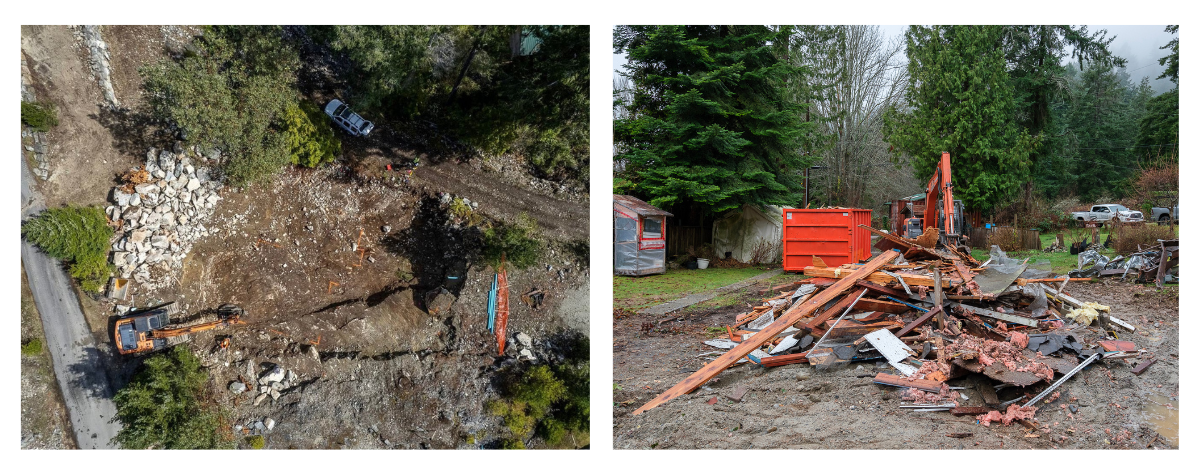
Another thing to watch out for on the Sunshine Coast is lots that require a significant amount of groundwork and development before the build starts. If you’ve purchased a lot that requires demolition, is on an extremely steep gradient, has a significant amount of bedrock that will require blasting ahead of your build starting: The first phases of the build will take significantly longer, and will cost more.
The Budget & Proposal Process
One of the most important parts of preconstruction is developing a clear and realistic budget. Early on, this often starts with a concept-level budget, which is a high-level estimate based on similar projects he location of your build, and initial design direction.
As plans become more detailed, the budget evolves into a more refined proposal.
This includes:
Allowances for items that may not yet be fully specified
Contingencies to account for unknowns
Clear breakdowns to support transparency and understanding
The goal is to align the scope of the project with the available budget, not just at the beginning, but all the way through construction. When this alignment is done well, it reduces surprises and supports better decision-making at every stage.
Who You’ll Meet at Lincoln Construction
Preconstruction is also where early relationships-building begins. For us, it’s important that we work with people we can communicate and connect with, as most home build projects last between 12-24 months. During that time a lot of conversations happen between you, your family and Lincoln Construction, so building a rapport early is a priority to us.
At Lincoln Construction, our consultation and preconstruction process is structured to provide clarity, consistency, and a clear path forward, and generally unfolds in this order:
Step 1: Chat with Maria (Project Coordinator)
(If you already have a reasonably fleshed out idea of what it is that you want, you may skip step one and move straight to meeting with Kale for Step 2.)
This optional initial conversation focuses on understanding where things are at whether it’s early ideas, a purchased property, or plans already in progress. It’s a chance to share your ideas, ask questions and get a sense of the process.
Step 2: Meet with Kale (Preconstruction Manager)
From there, the conversation moves into feasibility, budgeting, and next steps. This is where the project starts to take more defined shape, with a focus on aligning vision and investment.
Step 3: On-site/In-Office meeting with Erik (Founder & CEO) & Kale
Seeing the property in person allows for more detailed, site-specific planning. Access, layout opportunities, and potential challenges can all be discussed in context, helping to move the project forward with greater clarity. If you have yet to purchase a lot, we invite you to our office to discuss options (and help create a shortlist) for securing the ideal lot for your project.
Why Slowing Down Early Helps Everything Move Faster Later
It can be tempting to move quickly toward construction, but taking the time to work through preconstruction thoroughly often leads to a smoother, more efficient build. Clear plans, aligned budgets, and early problem-solving reduce delays, minimize changes, and create a more predictable process overall.
In most cases, slowing down at the beginning is what allows everything else to move forward with confidence.
Get ready to plan your next project
Ready to start the conversation? → Book a consultation
See how our process has played out on past projects → Explore our portfolio